
 508-717-0425
Comprehensive Eye Exam in North Attleboro & North Dartmouth, MA
WHEN SHOULD YOU GET A COMPREHENSIVE EYE EXAM?
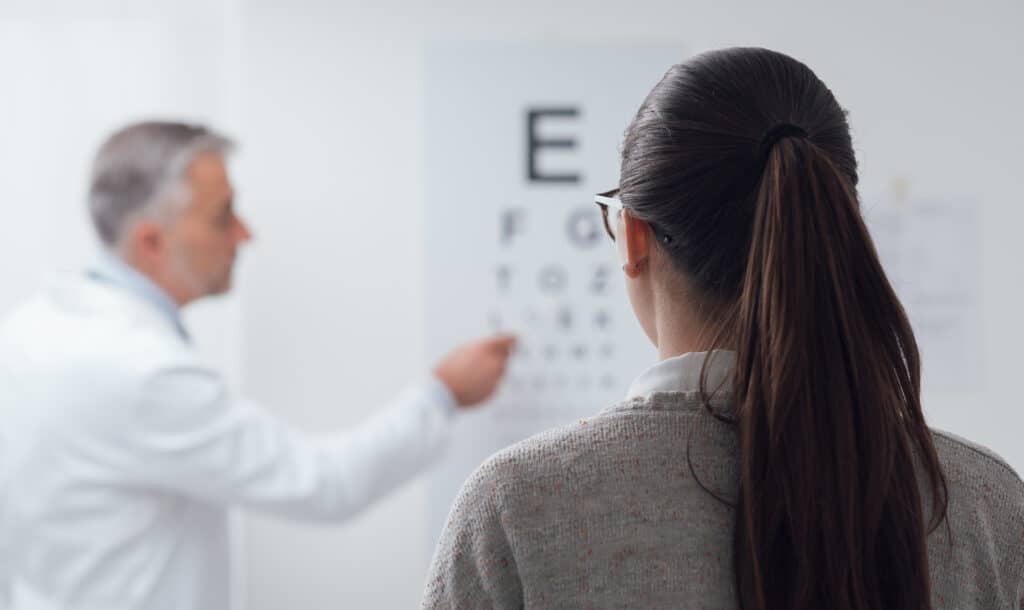 Patients should see their doctor for a comprehensive eye exam every year. Children should have regular tests to ensure the proper development of their vision and prevent any interference with academic achievements. Older adults are often at a higher risk for eye conditions such as glaucoma, macular degeneration, and cataracts. Even if eyes are healthy, a regular eye exam will provide the doctor with an ability to view the blood vessels of the eye. With the information obtained during an examination of the eyes, physicians have been able to detect chronic conditions such as high cholesterol, diabetes, and high blood pressure. The early detection of these conditions can lead to early treatment.
WHAT IS A COMPREHENSIVE EYE EXAM?
SCHEDULE YOUR APPOINTMENT TODAY
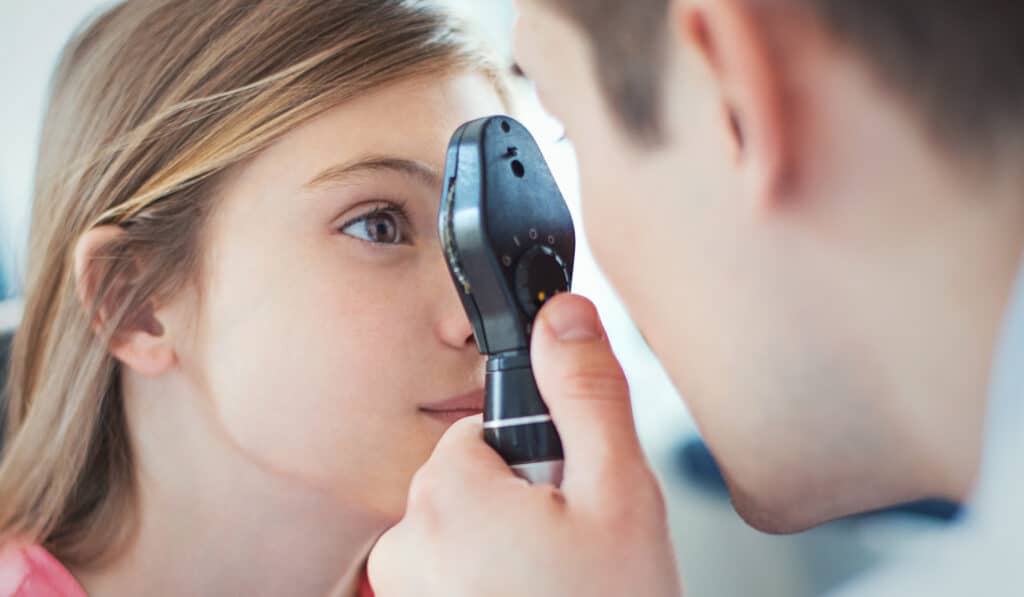
An eye exam is different from a vision screening, which only tests vision and is commonly performed by a school nurse, pediatrician or other health care provider. Only an eye doctor can perform a comprehensive eye exam to evaluate the overall health of the eye and detect any changes that may indicate a vision disorder. During a routine eye exam, the doctor will evaluate the eyes for refractive errors, as well as common conditions such as:
- Amblyopia
- Strabismus
- Eye Tracking
- Presbyopia
- Glaucoma
- Diabetic Retinopathy
This is done through a series of eye tests that examine all aspects of the eye and may include:
- Visual Field Test
- Dilation
- Glaucoma Test
- Slit-lamp Examination
- Cover Test
- Retinoscopy
- Refraction
These tests are performed in the doctor’s office and are safe for all patients.
TREATMENT AFTER A COMPREHENSIVE EYE EXAM
 After completing the comprehensive exam and coming to an accurate diagnosis, the doctor will develop a treatment plan based on the findings of the exam. This treatment plan may include:
SCHEDULE YOUR APPOINTMENT TODAY
- A prescription for eyeglasses or contact lenses
- Medication
- Vision therapy
- Eye vitamins
- Vision supplements
- Surgery
What conditions can be detected during an eye exam?
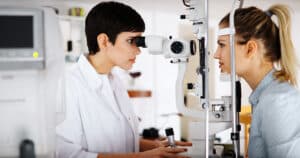 The most common eye conditions diagnosed during a comprehensive eye exam involve refractive errors that cause blurry vision for patients. These conditions affect millions of people in the United States and often get progressively worse as patients age. Fortunately, refractive errors can be easily treated to let patients enjoy clear vision at all distances.
- Myopia, also known as nearsightedness or shortsightedness, is a condition of the eyes in which nearby objects are clear and distant objects appear blurry. Almost a third of people in the United States experience some degree of nearsightedness.
- Hyperopia, also known as farsightedness, a condition of the eyes where the focus on distant objects is better than the focus on objects closer to the eye, so nearby objects appear blurry. The eye is designed to focus images directly on the surface of the retina; with hyperopia, light rays focus behind the surface of the retina, producing a blurry image.
- Astigmatism occurs when the cornea – the clear covering over the eye – is slightly irregular in shape, preventing light from focusing properly on the retina in the back of the eye. With astigmatism, some of that light focuses either in front of or behind the retina, resulting in vision that may be blurry for either near or far vision or, for all objects.
How Are Various Eye Conditions Treated?
All of these vision conditions can be effectively treated with either eyeglasses or contact lenses. Eyewear may be used during certain activities, such as watching television or driving, or at all times. Our patients are given a wide selection of eyeglass frames, lenses and contact lenses to choose from in our Optical Shop. A full-service lab is available to prepare the lenses for patients while they wait.
